
How we make Doce campanadas
Two short films in about a day and a half, from Victor M. Rodriguez's voice notes to a town in Blender to the upload, with the numbers, the costs and every miss along the way.
- 2 films
- 37.8 h from the first test to episode 2, finished
- 184 commits, every one co-authored by Claude
- 417 AI image takes
- 84 renders of the town in Blender
- $50.44 on video and GPU, paid by use
Two films, twelve strokes
2 films · about 37.8 h · 417 image takes · 131 video jobs · 184 commits · about $50.44 of usage-billed AI
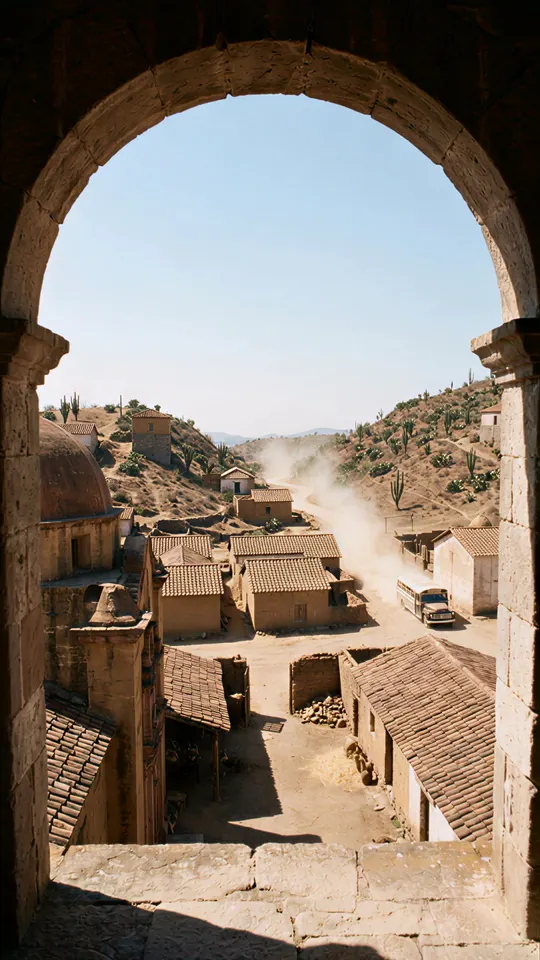
On the night of 22 November I rented a GPU for half an hour to see whether a short film could come out of it. About 37.8 h later, Va de Nuez had 2 finished films. Elisa and Andrés was already on YouTube. Andrés, the story of how the old man from that first film came to be alone on his balcony, was ready to upload. Both come from Victor M. Rodriguez's stories. Both are vertical, in Spanish, a couple of minutes long, and made with AI from the first frame to the last sound effect.
This is the long version of how we made them. Episode 2 started as voice notes from Victor and turned into a town in Blender: 84 renders of grey boxes and coloured capsules that told the image models where every wall and every person stands. On top of that town sit 48 shots, each picked from a handful of takes, animated with Kling, voiced with ElevenLabs and scored with a waltz and a bolero made on Suno.
I kept everything: the job logs, the rejected takes, the notes and the commits. So this piece can show the misses next to the fixes, with the numbers behind them. You will see a European town where a Mexican one should be, children in purple who wandered in from a colour legend, and a woman who turns to steam. Each miss gave us a rule, and the rules are what make the next episode cheaper.
The chart below puts the whole run on one clock: Victor's voice notes, my decisions, the agents' commits and the GPUs, hour by hour. Look at the night lanes. They keep moving while I sleep.
The git history starts on the 23rd at 11:14; episode 1's night has only its pods.
Show the data
| Lane | kind | start | end | value |
|---|---|---|---|---|
| L40S 48 GB, test | span | 2026-11-22T20:16 | 2026-11-22T20:47 | 1.09 |
| H100 SXM, ep1 | span | 2026-11-22T21:03 | 2026-11-22T23:05 | 4.39 |
| H100 SXM, ep1-wan | span | 2026-11-22T21:31 | 2026-11-22T22:47 | 4.39 |
| A100 SXM community, ep1-chole | span | 2026-11-23T08:11 | 2026-11-23T09:09 | 1.39 |
| Publishes episode 1 | point | 2026-11-23T10:16 | — | — |
| 10 commits | count | 2026-11-23T11:00 | 2026-11-23T12:00 | 10 |
| Ideas: the clockmaker, the arrival from the tower, radios, waltzes | span | 2026-11-23T11:10 | 2026-11-23T12:47 | — |
| 16 commits | count | 2026-11-23T12:00 | 2026-11-23T13:00 | 16 |
| The town: the bus from the capital | span | 2026-11-23T12:50 | 2026-11-23T12:53 | — |
| 10 commits | count | 2026-11-23T13:00 | 2026-11-23T14:00 | 10 |
| Proposes a second ritual | point | 2026-11-23T13:13 | — | — |
| Script, part 1 (PDF) | point | 2026-11-23T13:42 | — | — |
| 8 commits | count | 2026-11-23T14:00 | 2026-11-23T15:00 | 8 |
| 3 commits | count | 2026-11-23T15:00 | 2026-11-23T16:00 | 3 |
| 2 commits | count | 2026-11-23T18:00 | 2026-11-23T19:00 | 2 |
| Voice note, 3:25 | point | 2026-11-23T18:20 | — | 205 |
| Voice note, 4:47 | point | 2026-11-23T18:27 | — | 287 |
| Full script (PDF) | point | 2026-11-23T18:57 | — | — |
| 12 commits | count | 2026-11-23T19:00 | 2026-11-23T20:00 | 12 |
| The episode's five jobs | span | 2026-11-23T19:05 | 2026-11-23T19:10 | — |
| 15 commits | count | 2026-11-23T20:00 | 2026-11-23T21:00 | 15 |
| Voice note, 1:08 | point | 2026-11-23T20:50 | — | 68 |
| Voice note, 1:03 | point | 2026-11-23T20:51 | — | 63 |
| Voice note, 0:25 | point | 2026-11-23T20:52 | — | 25 |
| Voice note, 0:24 | point | 2026-11-23T20:54 | — | 24 |
| 11 commits | count | 2026-11-23T21:00 | 2026-11-23T22:00 | 11 |
| 12 commits | count | 2026-11-23T22:00 | 2026-11-23T23:00 | 12 |
| 14 commits | count | 2026-11-23T23:00 | 2026-11-24T00:00 | 14 |
| Voice note, 0:09 | point | 2026-11-23T23:14 | — | 9 |
| 24 commits | count | 2026-11-24T00:00 | 2026-11-24T01:00 | 24 |
| 6 commits | count | 2026-11-24T01:00 | 2026-11-24T02:00 | 6 |
| Asleep; the agents make stills | span | 2026-11-24T01:30 | 2026-11-24T07:09 | — |
| 4 commits | count | 2026-11-24T02:00 | 2026-11-24T03:00 | 4 |
| 4 commits | count | 2026-11-24T03:00 | 2026-11-24T04:00 | 4 |
| 6 commits | count | 2026-11-24T04:00 | 2026-11-24T05:00 | 6 |
| 1 commits | count | 2026-11-24T05:00 | 2026-11-24T06:00 | 1 |
| 15 commits | count | 2026-11-24T07:00 | 2026-11-24T08:00 | 15 |
| 5 commits | count | 2026-11-24T08:00 | 2026-11-24T09:00 | 5 |
| H100, SeedVR2 upscale | span | 2026-11-24T08:45 | 2026-11-24T09:59 | — |
| 3 commits | count | 2026-11-24T09:00 | 2026-11-24T10:00 | 3 |
| 3 commits | count | 2026-11-24T10:00 | 2026-11-24T11:00 | 3 |
| Episode 2 final | point | 2026-11-24T10:06 | — | — |
Source: doce_campanadas/ep01/NOTES.md "Pods" (UTC, shown UTC-6); doce_campanadas/ep02/NOTES.md (Victor's times); doce_campanadas/ep02/victor/*.md; git log; file times of doce_campanadas/ep02/clips/kling_hd (upscale). Data as of 2026-11-24 @e28cb68.
Va de Nuez, Victor and the series

Va de Nuez is a YouTube channel for Victor's stories, all of them. The name plays on a Mexican joke: de nuez, "of walnut", sounds like de nuevo, "again". The banner says Historias cortas para ver, y ver de nuez: short stories to watch, and to watch again. The plan is a new episode every few days, one playlist per series, and TikTok and Instagram later.
Victor M. Rodriguez has spent his working life in theatre and television. He directed telenovelas such as Destilando amor and Corazón indomable, and he wrote for television for years. Now he writes for the channel. I adapt his stories, stage them and animate them. He is credited as the writer, and from episode 2 as co-director too, because he gives director's notes on everything we show him.
Doce campanadas, "Twelve Strokes", is the first series: twelve stories of love and heartbreak around the last night of 2019, when the clocks strike midnight and Mexicans eat a grape for every stroke. The channel has 2 of them so far.
From episode 2 the credits read: original story by Victor M. Rodriguez; direction by Victor M. Rodriguez and Kevin Sallée; adaptation and animation by Kevin Sallée. They play on black after the last shot fades, so they never sit on top of the picture. The stories are Victor's, and he registers them with SOGEM, the Mexican writers' society.
A word on "we". In this piece it usually means me and Claude, the AI agent I work with every day. When it means Victor and me, I say so.
From a synopsis to an Up-style opening
Episode 1 began as Victor's one-page synopsis. It is New Year's Eve 2019 in an old building in Mexico City's Colonia Roma. Two fifth-floor balconies sit side by side. On the left, Elisa's party is loud. On the right, Andrés is alone with a cup of tea and his dog. Elisa toasts her late husband, notices her new neighbour and invites him over, along with all the guests of his very intimate party. He mutters that she is crazy. Inside, her family is lost in their phones, and only Chole, her cook, really sees her. So Elisa leaves with a tray and a bottle of champagne and rings his bell.
We turned that page into 29 shots, with lines drafted for Victor to approve. My one addition was the teacup. Andrés's cup tips over and shatters on the balcony floor, and that is how Elisa notices him.
Episode 2 was born on a phone call on the morning of 23 November. Victor and I wanted Andrés's love story with his late wife, in a small Mexican town, told in fast scenes like the opening of Up. It would run until her death and the bus that takes him to Mexico City, a week before episode 1 begins.
That morning Claude and I wrote a proposal in Spanish for Victor. Andrés is the town's clockmaker. A radio runs through the film: his station reads the exact time every minute, and hers plays the music of each decade. Two leather armchairs face each other at home, and one of them travels to Mexico City to end up on his balcony in episode 1. That is our nod to Up. Every New Year he rings the twelve strokes in the bell tower. When she dies, the clock stops, and the bus radio crackles with static as he leaves.

I made a few choices that morning. Andrés's wife became Guadalupe: Lupe, Lupita. I picked her face, option B, "because she comes from the city". The flat in the Roma was her family's, and the dog was hers. Buses put pets in the hold, so he smuggles the dog aboard in a bag. We also wrote down what we did not want: altars, mariachis, cantinas, a sepia filter.

For a few hours she was called Chayo, and these are her face options from then.

The age sheet follows Lupita from her twenties to old age, with two options per age. Andrés got the same treatment. Those sheets survived every later reset, and the stills of the two of them point back to them.
The pilot: three versions of episode 1
Episode 1 was as much a test of the pipeline as a film. We finished three versions of it and published the one that worked best.
The first test ran on the evening of 22 November: shots 1 to 6, the balcony exchange. The stills came from Higgsfield, and the video from an L40S rented on Runpod at $1.09/h. Wan 2.2 animated the shots and InfiniteTalk did the talking. The pod ran for less than half an hour and cost $0.49.
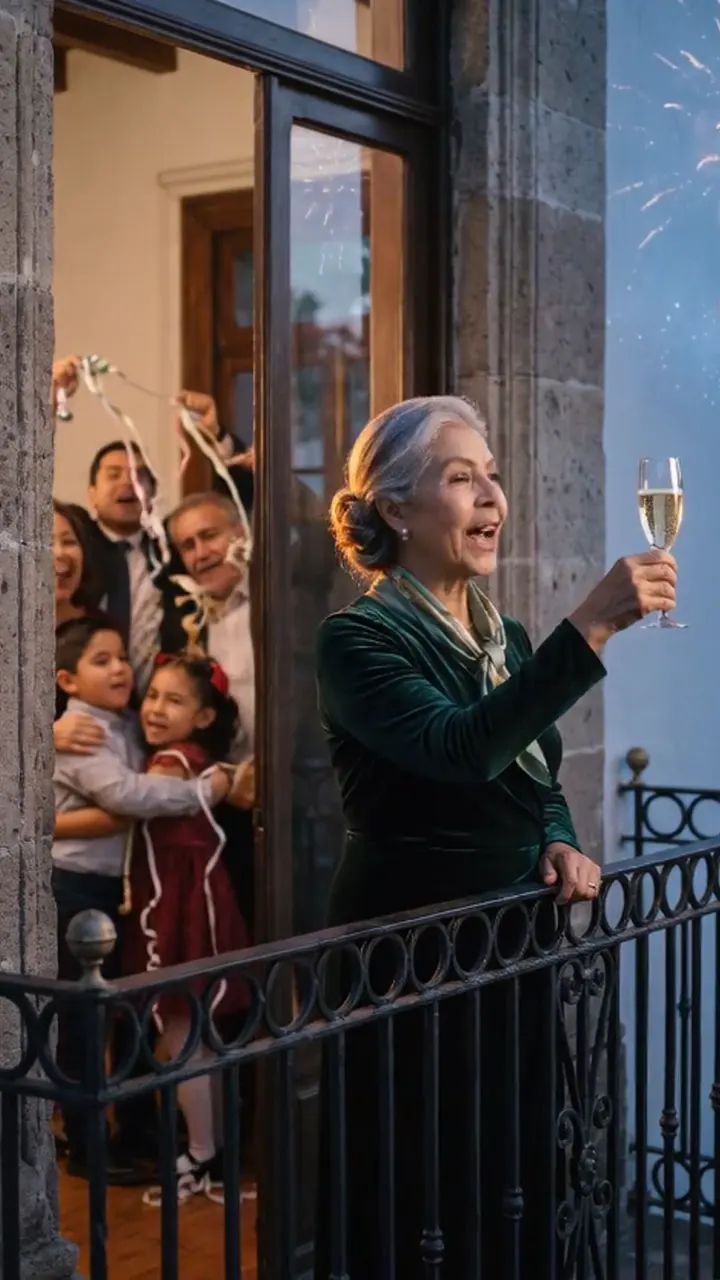
It was rough, and it was enough for me to say "make the full thing". That evening every still was redone with location references and a deep night. Two H100s at $4.39/h ran the open models: Wan 2.2 for the shots and LongCat-Video-Avatar for the lines.


The cup crash is a first-and-last-frame shot. The model gets the whole cup as its first frame and the shards on the floor as its last, and it finds the fall in between.
Overnight, Claude made a second version on Kie.ai with Kling: Kling Flash for most shots, Kling 4.0 for two of them, and Kling AI Avatar Pro for the lines. It came to 2,202 credits and needed 1 retake, because Andrés stood up in the middle of a line.
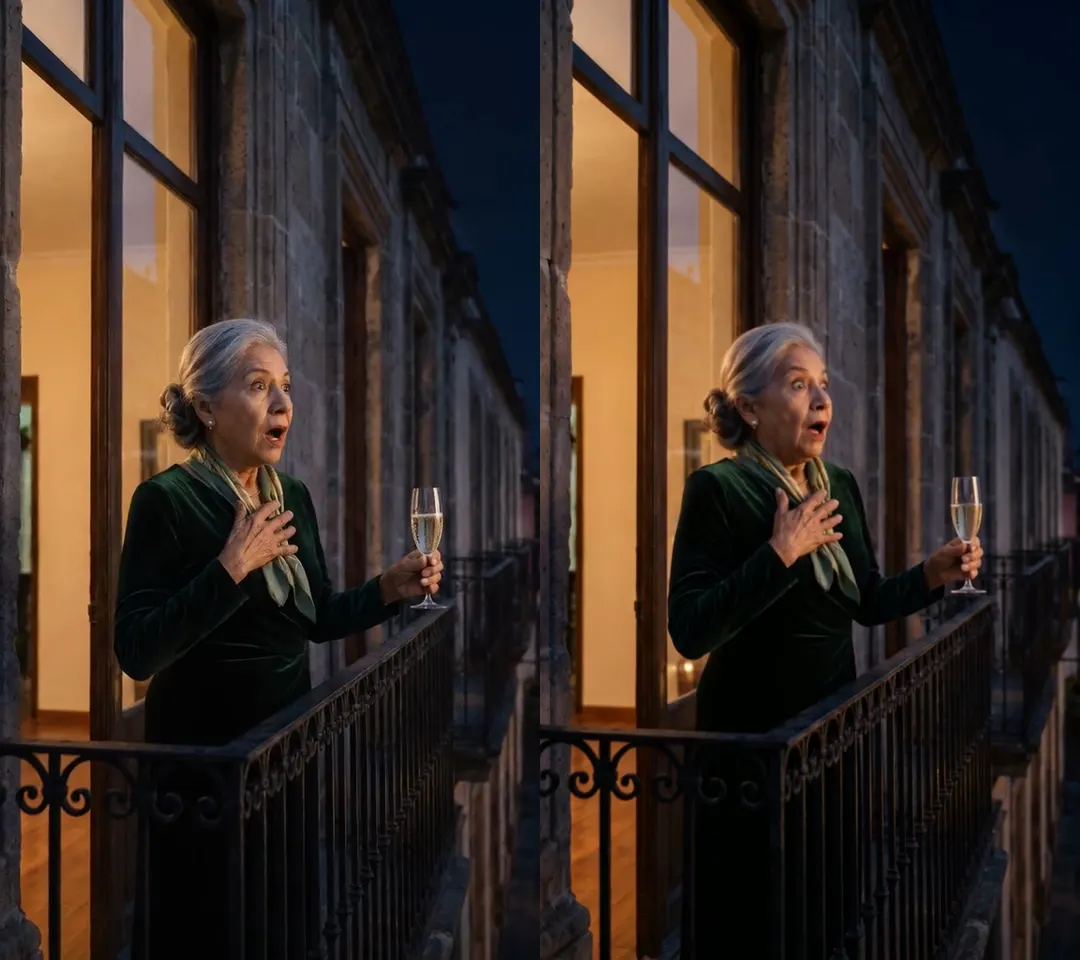
Here is shot 4, Elisa's startle, from the same still: Wan 2.2 on the left, Kling Flash on the right.
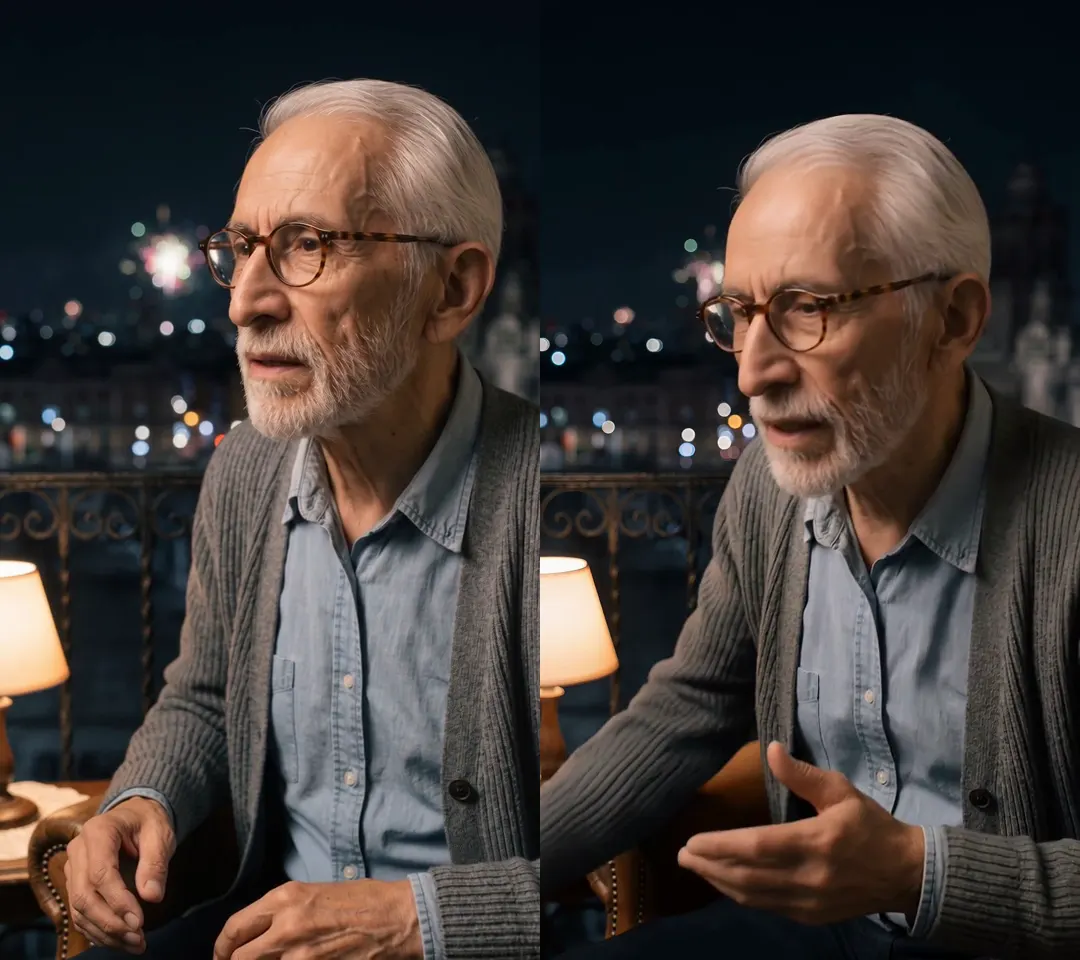
The lines decided it. These are the same lines from LongCat on the left and Kling AI Avatar Pro on the right. LongCat's lip sync was tighter and its faces acted, so the lines in the published film are LongCat's.
| Version | Models | Length | Usage cost | Outcome |
|---|---|---|---|---|
| Open models (v3) | Wan 2.2 + LongCat-Video-Avatar on H100s | 87.3 s | ~$13.70 of Runpod | Found the pipeline |
| All Kling | Kling Flash, Kling 4.0 and AI Avatar Pro on Kie.ai | 95.2 s | 2,202 credits (~$11.01) | Better shots; weaker lines |
| Hybrid (published) | Kling shots + LongCat lines on Runpod | 112.7 s | 1,384 Kling credits + the Runpod lines | LongCat: better lip sync and acting |
The hybrid adds the Chole scene. Its Runpod share is not separate from the episode total.
Source: doce_campanadas/ep01/NOTES.md "Versions", "Open models version", "Kling version"; costs.md; ffprobe doce_campanadas/ep01/renders/doce_campanadas_ep1_{v3,kling_v1,hybrid_v2}.mp4. Data as of 2026-11-24 @e28cb68.
The table sets the three versions side by side: the models, the length, the usage cost and what each one did best. The hybrid we published kept the Kling shots, 1,384 credits worth of them, and took the lines from LongCat.
The voices came from ElevenLabs. I first tried a local text-to-speech model on my Mac. It sounded young and had an English accent: free models without a Mexican reference voice guess the accent, and they guess wrong. On ElevenLabs we cast 3 Mexican library voices for the film's 15 lines: Carla for Elisa, Jorge for Andrés and Azu for Chole. Emotional lines get several takes and I pick one. On the first render I asked for much more sadness.

The next morning we added a scene: Elisa and Chole, the one person in the flat who really sees her.
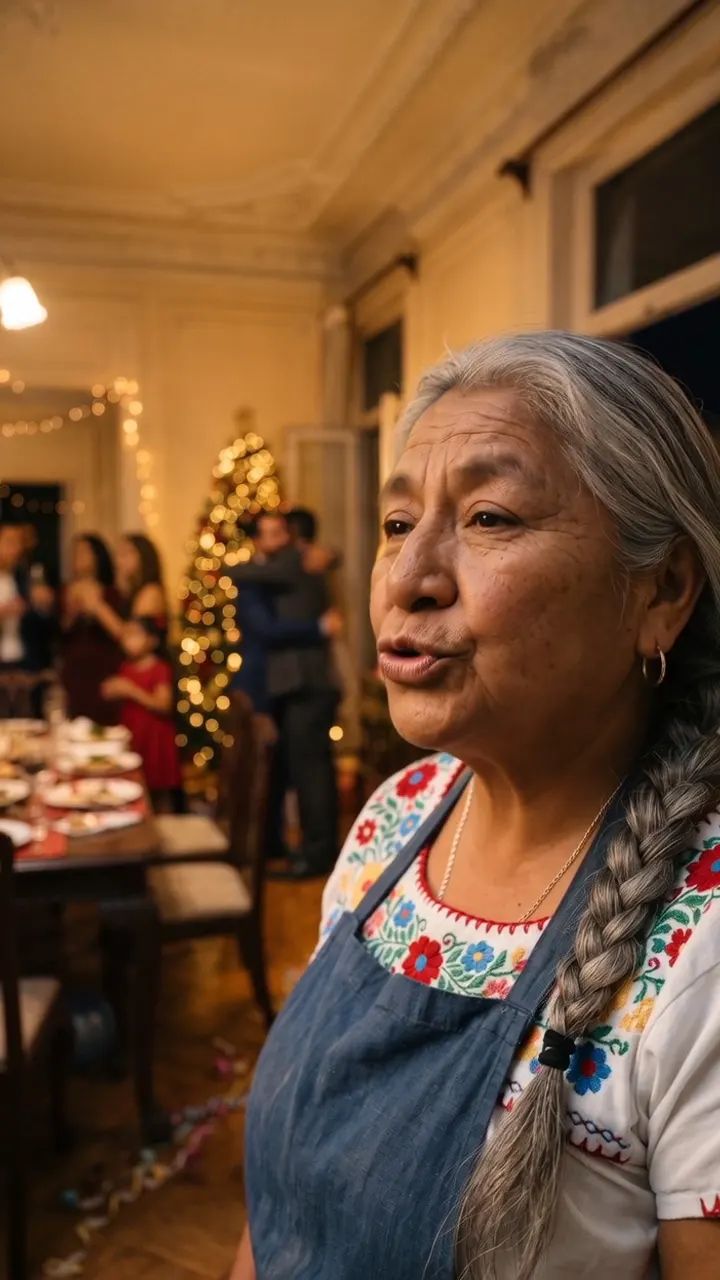
I wanted a quick adjustment, without retakes. So the scene is LongCat close-ups on stills we already had, run on an A100 at $1.39/h, with no new wide shots. Close-ups work better for these conversations anyway. "¡Ay, señora! Otra vez ya se va a encerrar con todos sus recuerdos," Chole sighs: there you go again, shutting yourself in with your memories. Elisa answers that we grow old and turn invisible, and asks for the tray.
We published the hybrid at 10:16 on 23 November: Kling's shots, LongCat's lines, the Chole scene, the series title and burned-in Spanish subtitles, 112.8 s long.

What the pilot taught us
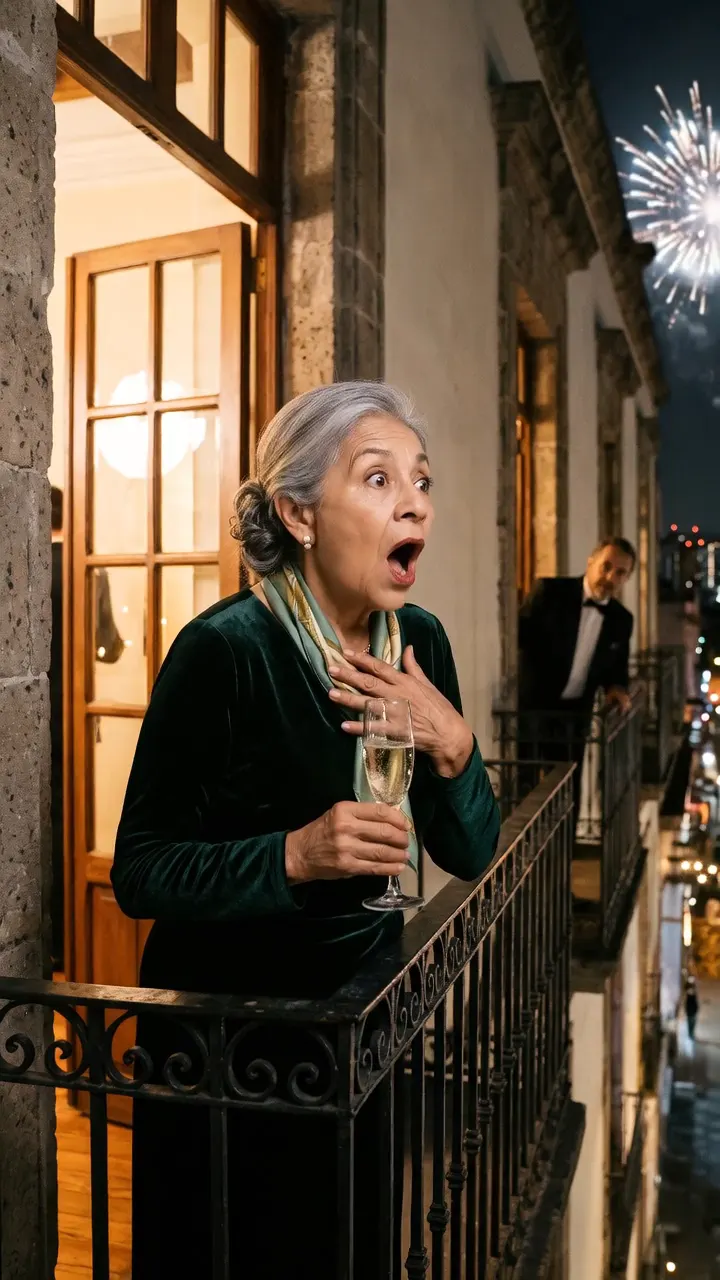
The pilot gave us rules. The first one: check every clip frame by frame before it goes into the cut. A small script lays each clip out as a dense sheet of frames, and I read it like a contact sheet.

The sheets caught Elisa taking a sip in the middle of her line,
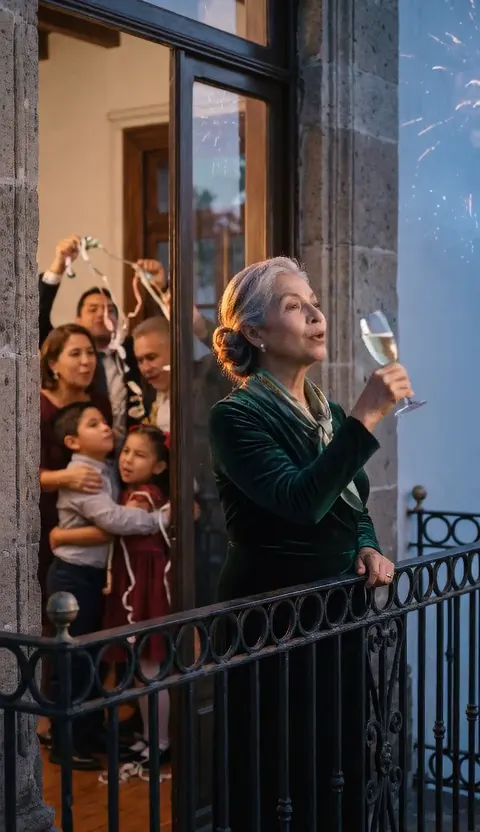
and a stranger who appeared on a balcony where nobody lives.
More rules followed. Dialogue goes on close-ups made from existing stills. A silent reaction borrowed from the tail of another clip hides the jump between two lines on the same still. Only shots without lines get sped up, because faster lips leave the voice behind.
The pods taught us about disks and GPUs. Models go on the pod's own disk, since the network volume crawled. That disk is wiped when the pod stops, so you run everything through and then terminate. We use H100s now: an A100 runs LongCat at 43 s a step, about twice as slow. On the L40S, a Wan 2.2 clip of a few seconds took 118–130 s of GPU time, and one InfiniteTalk segment of about three seconds took 103 s.
The last rule came from WhatsApp. It crops link previews to a square in the middle of the frame, and our title came out cut. Titles now sit inside that middle square.
Then came the first day on YouTube. These numbers are from YouTube Studio on 23 November 2026, and I will refresh them before this goes out. In its first hour the film had 54 views, and 71.4% of viewers kept watching. By 19:30 that evening, about nine hours in, it had 809 views, 10.1 h watched and 37 likes, and 63.2% of viewers kept watching. After that first push the curve flattened.
- Shorts feed 91.8%
- Outside YouTube (half of it WhatsApp) 5.3%
- YouTube search 1.2%
- Channel pages 1.1%
- Other 0.6%
"Other" is what is left to 100 %.
Show the data
| Source | Share of views |
|---|---|
| Shorts feed | 91.8 |
| Outside YouTube (half of it WhatsApp) | 5.3 |
| YouTube search | 1.2 |
| Channel pages | 1.1 |
| Other | 0.6 |
Source: doce_campanadas/ep01/NOTES.md "Stats". Data as of 2026-11-24 @e28cb68.
Nearly all the views came from the Shorts feed: 91.8%. Links from outside YouTube brought 5.3%, and about half of those came through WhatsApp. That is why the title rule matters to us.
A day of voice notes
Episode 2 was written in one day, over WhatsApp. Victor sends voice notes. I answer with text, pictures and, later on, animatics. On 23 November his first note came in at 11:10 and his last at 23:14.
My stance from the start was simple. We use our shorter, edited version. We make decisions from his text, we tell him why, and he can argue back.
The chart lays the day out: his notes as dots sized by their length, against our commits per hour. Look for the two long notes at 18:20 and 18:27, and the burst of commits that answers them.
- 11:10–12:47 Ideas: the clockmaker, the arrival from the tower, radios, waltzes
- 12:50–12:53 The town: the bus from the capital
- 13:13 Proposes a second ritual
- 13:42 Script, part 1 (PDF)
- 18:20 The whole episode by voice note (1 of 2)
- 18:27 The whole episode by voice note (2 of 2)
- 18:57 Full script (PDF)
- 19:05–19:10 The episode's five jobs
- 20:50 Notes on the bolero
- 20:51 The idea of radio dedications
- 20:52 Tile roofs and back yards
- 20:54 Voice note
- 23:14 The crossed rebozo
113 commits that day; the history starts at 11:14.
Show the data
| Time | kind | end | value |
|---|---|---|---|
| 2026-11-23T00:00 | commits | 2026-11-23T01:00 | 0 |
| 2026-11-23T01:00 | commits | 2026-11-23T02:00 | 0 |
| 2026-11-23T02:00 | commits | 2026-11-23T03:00 | 0 |
| 2026-11-23T03:00 | commits | 2026-11-23T04:00 | 0 |
| 2026-11-23T04:00 | commits | 2026-11-23T05:00 | 0 |
| 2026-11-23T05:00 | commits | 2026-11-23T06:00 | 0 |
| 2026-11-23T06:00 | commits | 2026-11-23T07:00 | 0 |
| 2026-11-23T07:00 | commits | 2026-11-23T08:00 | 0 |
| 2026-11-23T08:00 | commits | 2026-11-23T09:00 | 0 |
| 2026-11-23T09:00 | commits | 2026-11-23T10:00 | 0 |
| 2026-11-23T10:00 | commits | 2026-11-23T11:00 | 0 |
| 2026-11-23T11:00 | commits | 2026-11-23T12:00 | 10 |
| Ideas: the clockmaker, the arrival from the tower, radios, waltzes | message | 2026-11-23T12:47 | — |
| 2026-11-23T12:00 | commits | 2026-11-23T13:00 | 16 |
| The town: the bus from the capital | message | 2026-11-23T12:53 | — |
| 2026-11-23T13:00 | commits | 2026-11-23T14:00 | 10 |
| Proposes a second ritual | message | — | — |
| Script, part 1 (PDF) | message | — | — |
| 2026-11-23T14:00 | commits | 2026-11-23T15:00 | 8 |
| 2026-11-23T15:00 | commits | 2026-11-23T16:00 | 3 |
| 2026-11-23T16:00 | commits | 2026-11-23T17:00 | 0 |
| 2026-11-23T17:00 | commits | 2026-11-23T18:00 | 0 |
| 2026-11-23T18:00 | commits | 2026-11-23T19:00 | 2 |
| The whole episode by voice note (1 of 2) | note | — | 205 |
| The whole episode by voice note (2 of 2) | note | — | 287 |
| Full script (PDF) | message | — | — |
| 2026-11-23T19:00 | commits | 2026-11-23T20:00 | 12 |
| The episode's five jobs | message | 2026-11-23T19:10 | — |
| 2026-11-23T20:00 | commits | 2026-11-23T21:00 | 15 |
| Notes on the bolero | note | — | 68 |
| The idea of radio dedications | note | — | 63 |
| Tile roofs and back yards | note | — | 25 |
| Voice note | note | — | 24 |
| 2026-11-23T21:00 | commits | 2026-11-23T22:00 | 11 |
| 2026-11-23T22:00 | commits | 2026-11-23T23:00 | 12 |
| 2026-11-23T23:00 | commits | 2026-11-24T00:00 | 14 |
| The crossed rebozo | note | — | 9 |
Source: doce_campanadas/ep02/victor/cap2_audios_2026-11-23.md, doce_campanadas/ep02/victor/notas_2026-11-23_bolero_pueblo.md (headings: time, length); doce_campanadas/ep02/NOTES.md (times of his other messages); git log. Data as of 2026-11-24 @e28cb68.
He took to the clockmaker at once.
He pictured the opening from the bell tower: a dirt road, a bus raising dust, people stepping off with turkeys and bundles. Then he sent photos and videos of radio-record players, among them his parents' old console. One of the pictures, a turquoise portable, became the radio in the film.

He suggested the score as well: the village waltzes of a musician from his family, from his mother's region, the Mixteca. And he thought of his mother's family town. From its bell tower you can see the turnoff from the Panamericana and the bus coming in loaded with goods from the capital. His aunts traded goods from the city, and one of them was a rural teacher, like Lupita.
Around 13:10 we decided together: a dusty town in the Mixteca, in four seasons. A hot, dusty arrival. Cold New Year's Eves with fog and breath in the air.
He told me about his family's devotion to a yearly procession, with carpets of coloured sawdust laid in the streets, and offered it as a second ritual for the film.
We kept one ritual, New Year's Eve in the bell tower, and Victor agreed within minutes.
At 13:42 the first part of his script arrived as a one-page PDF: the bus, Lupita, her shout that the clock is fast, the priest who comes running, the formal introduction, the handshake.
His text ran long for the format. Our edit of part one came to 12 shots, a good deal shorter than his text laid out shot by shot. Two rules came with it. A line stays on screen for three seconds at most, and longer lines run over reaction shots. Lip sync goes only on faces close enough to read.
At 18:20 and 18:27 the whole episode arrived as two voice notes, 8:12 in all, because the PDF would not upload. The full script followed as a PDF that evening. With part one, his two PDFs add up to 4 pages.
At 18:46 we sent our cut: 49 shots, 124.5 s. I told him I loved it and that it was long for a Short.
All evening the pictures kept coming, and he sent notes on everything: the bolero, the roofs of the town, the radio.
My answer was that we are not making a masterpiece. Everything we build for this episode, the town, the characters and the song, serves the episodes after it. So we spend where the work carries over, and we cut where it does not.

Late that night I sent him a picture of young Lupita and Andrés.
Looking back, episode 2 is our outline with his texture. He kept the radio, the armchairs, the New Year's Eves in the tower, the keys to a flat in the Roma, the dog, the stopped clock and the static. He added the rebozos, the dance with the broom, the watch she hands over in the classroom, the repair that keeps taking longer, the record and the dance seen through the shop window, the doves at the wedding, the loupe, the dog in her rebozo and the wedding photo on the bus.
Victor's story, as filmed
Here is the episode as it ended up: 48 shots and 121.9 s of film, with 14 lines of dialogue, telling a story that spans 57 years. I tell it in five movements.

1962, the arrival. From the bell tower we watch a bus leave the highway in a trail of dust. Lupita Corona, the new teacher, steps down in the plaza, breathes in the town and checks her watch against the tower clock. Andrés is up on a scaffold by the dial. Her watch disagrees, so she cups her hands and shouts up: "¡Está adelantado!" It's fast! He mutters "Está loca", she's crazy, then checks his pocket watch: "Tenía razón." She was right. Don Anselmo, the priest, hurries over wiping his mouth and introduces them. Her smile softens his face.
The routine. He sweeps his doorstep early to see her pass, in a different rebozo each day, with children around her. "Buenos días, señorita maestra." "Buenos días, don Andrés." Inside, he dances clumsily with the broom. One morning she does not pass. His radio reads the time, "La Hora Exacta. Son las ocho horas, un minuto", and she runs by: "¡Se me descompuso el reloj!" My watch broke! In her classroom he holds her books and fans her, and she hands him the watch. "Puede pasar el lunes por él," he says: come for it on Monday.
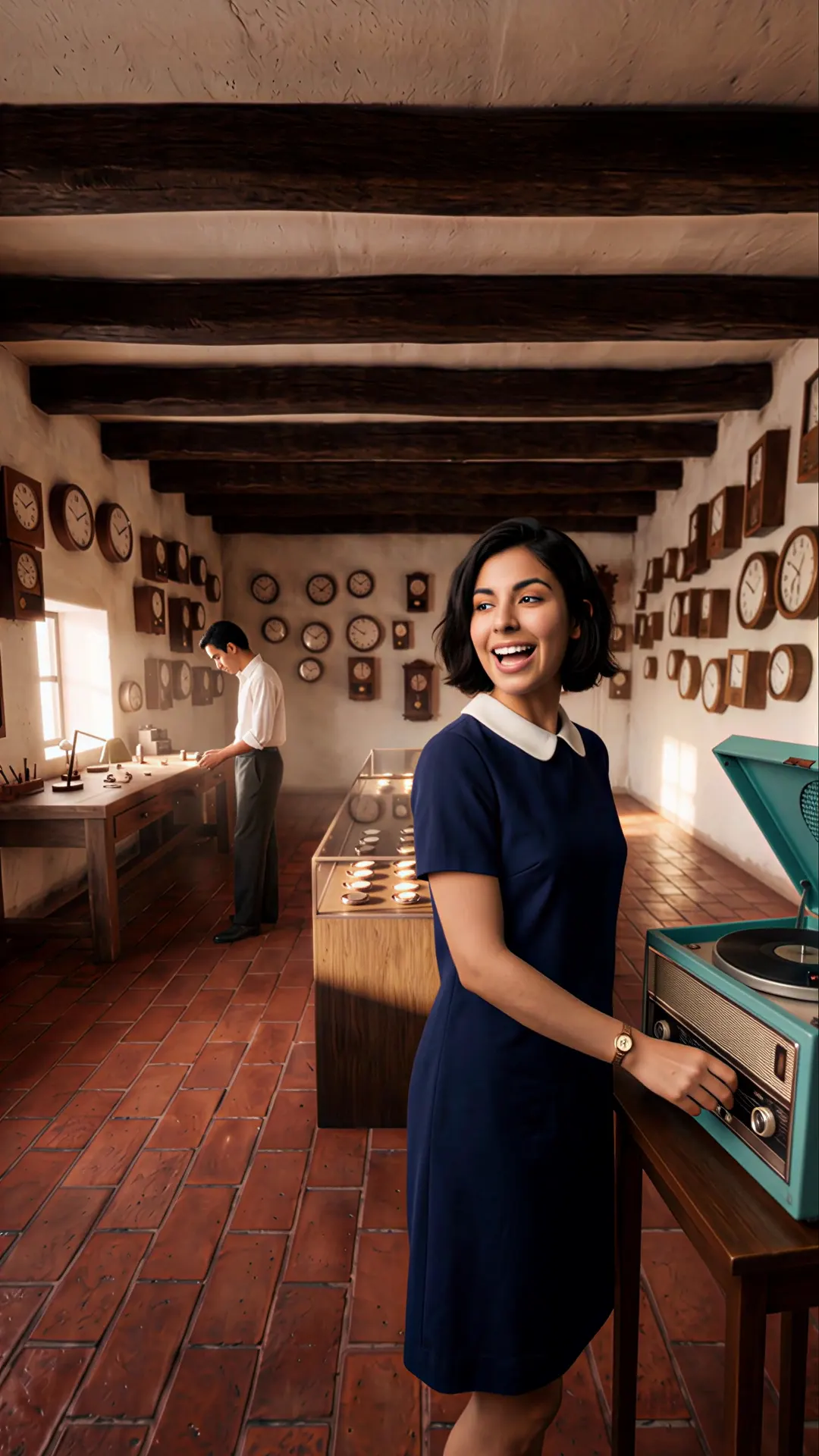
The shop. On Monday: "Estará hasta el miércoles." It'll be ready Wednesday. On Wednesday: "El viernes." Friday. On Friday she turns his time station over to boleros: "Así está mejor." That's better. He freezes. The next Monday she brings a record and pulls him into a dance, while the children press their faces to the glass.
A life, 1963 to 2018. They marry with bells, doves and rice. On their first New Year in the belfry he rings the twelve strokes, and she eats her grapes laughing and feeds him his. The shop becomes their home: flowers, the wedding photo, two armchairs facing each other. Every New Year, the tower. He goes grey and gets glasses, and the stairs get hard for her. By the door hang the keys to a flat in the Roma. "Algún día nos vamos a México," she says: someday we'll go to Mexico City. They never go. Old, she comes in soaked with a stray dog wrapped in her rebozo. He says no, they both make the same face, and he gives in. On the last New Year she watches from her armchair by the window while he rings the twelve alone, for her.
After, 2019. The bells toll. Andrés, in mourning, rings them in tears, then stops the clock himself. In December he packs her books and records, takes down the keys and leaves with one armchair, the record player, the wedding photo and the dog hidden in a bag, because the coach line will not take it. Through the coach window he sees the stopped clock. A week later, on a balcony in the Roma, episode 1 begins.
Some of these choices were ours, and we told Victor why. The rebozos are three days in one frame. The bolero she hums stays unvoiced, because the voice model cannot sing in tune. The time radio is first heard on the morning she does not come. The dance is seen from outside, through the glass, with the children's faces. Three New Year's Eves in the tower share one fixed frame, a couple of seconds each, while the two of them age.

Victor gets storyboard pages captioned in Spanish, one frame per shot, so he can point at a shot and say what he wants.

Scouting a town that does not exist
Our town is invented, so we scouted it from a desk. The first locations Claude made were a misty mountain town, from before we picked the Mixteca.

Then came research. The Mixteca baja is hot and semi-arid. It rains from June to September: green hills, mud, storms in the afternoon. From October to May it is dry and brown, hottest in April and May and coldest in December and January. That gave us a plan: a hot, dusty arrival, cold New Year's Eves with rebozos and breath in the air, and a wedding in the rains.
The town also had to age, while the church stays the same. In 1962 it has dirt streets, adobe and donkeys. By 1975 there are power poles and the first cement houses. After the 1980 earthquake the arcade is rebuilt. In the 2000s come paved streets, antennas and motorcycles, and by 2019 cars, mototaxis and a modern coach.
We also looked at photos of a real place, a town in the Mixteca of Puebla where Victor's mother's family comes from. Those photos are not ours, so they served as private reference only, and you will not see them here.
The first AI references came from a layout drawing: 48 jobs on Nano Banana. The keeper, which we called est_a, set the layout. The arcade with the market is on the left, and the ochre church with its two towers stands at the back, the clock on the right tower. A low churchyard wall has a gate in it. In the middle is a well with an iron hand pump, because Victor wanted the town's well there in place of a bandstand.

Some takes came out looking like plastic, so we tried a film grade on top. Drag across the image to compare.


One at a time, the references looked fine. Put together, they never agreed on the geometry. The clock jumped to the wrong tower, the scaffold floated above the dial, and the bell moved every time, with no believable rope. On the evening of the 23rd I called it: tabula rasa. Every location reference went to a folder of rejects, and only the character references stayed. From then on, the geometry would come from a town in 3D.
A town in Blender
In film, a blockout is a rough 3D version of a set: grey shapes in the right places, so you can plan cameras before anything is pretty. Ours started at 19:03 on 23 November and went through 8 review rounds with me in about 3 h.
The town is data. One Python file, layout.py, holds every position, size, camera and era, 1,428 lines with no Blender import. 104 unit tests check it: footprints that must not overlap, sight lines that must stay open. A second script, town.py, builds the town in Blender from primitives and flat colours, lights it with a soft sun from the south-west and renders each camera. Its first authority was est_a: the plaza camera was matched to that image point by point.


Round 1 was the 1962 plaza and a few fixed cameras. Rounds 2 and 3 made the town denser and added roads and the inside of the shop. Round 4 brought the road in from the north and an atrium around the church. Round 5 fixed where the road meets the plaza and added a wide aerial camera. Round 6 set terraced houses on a soft hill and split the town into two eras. Round 7 brought tile roofs and back yards, and round 8 made 2019 read as 2019, with rebuilt houses, a paved plaza and a bandstand.

Round 7 answered his note on the town. Most roofs became tile, and every house got a yard behind it for the animals.
The two eras are layers on one ground plan. The plaza, the roads, the church, the arcade and the shop never move. The years swap what stands around them.


Drag between the two years: the streets stay put while the houses change.
Then came the people. The blockout has 33 cameras and 39 staged shots. Each figure is a colour-coded capsule: Andrés blue, Lupita magenta, Don Anselmo green, children purple, extras grey. A nose on the head shows which way a figure faces. In all, the blockout made 84 renders, and I checked every one before anything was generated from it.

The shop got the same care. It is one long whitewashed adobe room at the south-west corner of the plaza, with clocks on every wall, a workbench under the window and the radio on the west wall. From 1975 its north end is their home: two armchairs facing each other under a window that looks across the plaza at the tower.
One more rule came from the machine. My Mac has little memory, and a heavy Blender scene in another project once took the whole machine down. Every Blender run now goes through a small guard that watches its memory and kills the job before it can take the Mac with it.
Look masters: from grey boxes to a place
The grey boxes still had to become a place. A look master is the photoreal version of a blockout camera, and it becomes the reference for every later shot of that place. We logged 35 takes for the masters of the town.
The first was the town in 1962, from the air. The render was the only reference, and the look went in words. The prompt opens like this:
The reference image is a 3D blockout: copy its exact camera, framing and layout, and the position, size and orientation of every building, wall, road and object; turn every flat shape into the real thing.


Slide from the render to the master. Every roof and every road sits where the blockout put it.


The plaza master needed a second pass to fix one roof. Then we learned the next rule the hard way: never use one era as the reference for the other. Given the 1962 master as a reference, the 2019 town came out as 1962 again.


We threw that one away. The 2019 aerial we kept is a take I made myself.


More rules came out of that evening. A photo with the same framing as the blockout overrides the blockout, even when the prompt says to use it for looks only: an early aerial copied a photo's roofs. From a different camera, the era master brings only the look, and the layout stays with the render.
Then the haze rule. Dust and smoke in a prompt turn into haze, so we leave them out and write: "clear, dry, crisp air, sharp all the way to the hills; no haze, no fog, no dust cloud, no smoke."
When a take is right except for one miss, like a hole in a roof or a stray bus, it gets one quick edit. The picked take is the only reference, and the prompt says "keep everything else exactly as it is; only..." followed by the fix.

The home master came out of the overnight run: two armchairs facing each other under the window. I let it stand.


Same camera, same blockout, two eras. Watch the roofs turn to cement and the dirt to pavement while the church keeps its place.
Stills: a night of takes
Every shot starts as a still. We make them with Nano Banana Pro on Higgsfield's Unlimited plan, so an extra take costs $0. Higgsfield's MCP refuses the Unlimited plan from Claude Code, so Claude drives the web app in my Chrome. A small helper script pasted into the page sets the prompt and the references, and it clicks Generate only while the button reads UNLIMITED. About one submission in five fails without a word, so every one gets checked.
The staged blockout render is the image being edited. The prompt names the capsules in that shot and says who stands where.


The big rule: stills are video start frames. A still shows the moment the action begins, because the video model animates forward from it, and the peak comes later in the clip. So a prompt describes a pose you could photograph. Words like "about to", "just" and "starts to" are out: s09 came out with Andrés already upright, when he should have been bent over, dusting. End frames are only for shots where the change is the point, and where it visibly changes the picture.


Short prompts come out plastic. So every prompt ends with the same realism block, word for word:
Photoreal photograph, shot on 35mm film, Kodak Portra, natural film grain, documentary style, real weathered textures, uneven light, imperfect and lived-in. Not CGI, not 3D render, not illustration, no plastic or waxy look.
Characters are locked per age, each with its reference images. Nano Banana ages people by about a decade, so we state the age twice and add cues such as "no grey hair, firm skin".
For every take I get a review copy: the take, Victor's Spanish caption for the shot, the pose it should show and the blockout render as an inset.

On the night of the 23rd I went to bed and left Claude a brief. Start every shot. Judge every take one by one. Keep only the great ones. Iterate all night. The run went from 1:30–5:04 in 11 waves and judged 159 takes. Rejects were moved to a folder and kept, and every verdict went into the log. In the morning I read the summary first, then made my calls.
- Kept overnight
- Rejected overnight
Show the data
| Wave | Kept overnight | Rejected overnight | start | end |
|---|---|---|---|---|
| C1b | 7 | 9 | 2026-11-24T01:16:59 | 2026-11-24T01:31:41 |
| C2a | 9 | 18 | 2026-11-24T01:39:16 | 2026-11-24T02:16:00 |
| C1c | 7 | 15 | 2026-11-24T02:24:18 | 2026-11-24T02:41:33 |
| C2b | 12 | 16 | 2026-11-24T02:48:51 | 2026-11-24T03:10:14 |
| C4 | 7 | 11 | 2026-11-24T03:19:57 | 2026-11-24T03:34:27 |
| C3 | 8 | 14 | 2026-11-24T03:42:56 | 2026-11-24T04:03:09 |
| C5 | 4 | 4 | 2026-11-24T04:09:43 | 2026-11-24T04:15:23 |
| C6 | 4 | 4 | 2026-11-24T04:25:32 | 2026-11-24T04:28:47 |
| C7 | 2 | 2 | 2026-11-24T04:36:41 | 2026-11-24T04:37:20 |
| C8 | 2 | 2 | 2026-11-24T04:49:13 | 2026-11-24T04:49:58 |
| C9 | 1 | 1 | 2026-11-24T04:58:55 | 2026-11-24T04:58:59 |
Source: doce_campanadas/ep02/stills/candidates/jobs.json (wave, night verdict, Higgsfield file stamps in UTC shown UTC-6). Data as of 2026-11-24 @e28cb68.
Each bar is a wave on the clock. The early waves threw out more than they kept. The small late waves, aimed at the last stubborn shots, kept about half. Over the night, 39.6% of the takes were kept.
Each rule from that night comes with a pair of pictures. Name only the capsules in the shot. With the full colour legend in every prompt, the model added a priest and children in purple to shots that have none.


Say who stands on the left and who stands on the right, read off the render.


Watch for text. English leaked onto the classroom blackboard, onto book spines and onto a brand plate. All of those were rejected.


And watch the town. One take put a European town with a grey stone tower behind a Mexican funeral. The keeper is the previous frame by day, in mourning black, and the town reads Mexican.


Props off camera need saying. The radio lives on the west wall, so a frame that misses it says "no radio in this frame", or the model adds one. The boilerplate breaks continuity too: her gold watch sits in the shop from s19 to s23, so her wrists are bare in between. Nano Banana will not bring a hand in from a chosen side, and it will not change a pose it was told to keep exactly. It is good at repairs: a painted blush softened, a second watch removed, a sheet of paper turned into a fan.
Here are two more, from render to still. First the shop counter,


then the last New Year, seen from her armchair.


In all we made 221 takes for the shots of episode 2, from 113 setups. Of those, 63 were kept and 96 rejected. Another 62 came from the waves I judged myself, without a logged verdict. Most shots needed two takes. The radio insert needed 17.
- Kept overnight
- Rejected overnight
- Judged by Kevin
Leaves out the 10 master takes of the same log. s06 was cut; s48 reuses an episode 1 clip.
Show the data
| Shot | Kept overnight | Rejected overnight | Judged by Kevin |
|---|---|---|---|
| s00 | 0 | 0 | 2 |
| s01 | 1 | 1 | 0 |
| s02 | 1 | 1 | 2 |
| s03 | 0 | 0 | 2 |
| s04 | 1 | 5 | 2 |
| s05 | 1 | 3 | 2 |
| s06 | 4 | 6 | 4 |
| s07 | 0 | 0 | 2 |
| s08 | 3 | 3 | 2 |
| s09 | 4 | 2 | 2 |
| s10 | 0 | 0 | 2 |
| s11 | 4 | 6 | 2 |
| s12 | 1 | 3 | 2 |
| s13 | 1 | 1 | 2 |
| s14 | 1 | 1 | 0 |
| s15 | 1 | 1 | 0 |
| s16 | 2 | 2 | 0 |
| s17 | 0 | 0 | 2 |
| s18 | 1 | 0 | 1 |
| s19 | 2 | 8 | 0 |
| s20 | 1 | 3 | 0 |
| s21 | 1 | 3 | 0 |
| s22 | 1 | 5 | 0 |
| s23 | 3 | 3 | 0 |
| s24 | 1 | 1 | 6 |
| s25 | 2 | 2 | 0 |
| s26 | 1 | 1 | 0 |
| s27 | 0 | 0 | 2 |
| s28 | 2 | 2 | 0 |
| s29 | 3 | 5 | 9 |
| s30 | 2 | 2 | 2 |
| s31 | 1 | 1 | 0 |
| s32 | 1 | 1 | 0 |
| s33 | 1 | 1 | 0 |
| s34 | 0 | 0 | 2 |
| s35 | 1 | 1 | 0 |
| s36 | 1 | 1 | 0 |
| s37 | 1 | 1 | 0 |
| s38 | 1 | 1 | 0 |
| s39 | 1 | 3 | 0 |
| s40 | 1 | 1 | 0 |
| s41 | 1 | 1 | 0 |
| s42 | 1 | 1 | 0 |
| s43 | 0 | 0 | 2 |
| s44 | 1 | 3 | 0 |
| s45 | 2 | 2 | 0 |
| s46 | 1 | 3 | 2 |
| s47 | 1 | 3 | 0 |
Source: doce_campanadas/ep02/stills/candidates/jobs.json (take file name -> shot; night verdict). Data as of 2026-11-24 @e28cb68.
Each bar is a shot. The tall one is s29, the radio insert, whose start and end frames had to match.
The percentage is the share of the step before. Some shots use a frame approved before the night.
Show the data
| Step | stat | Takes | share |
|---|---|---|---|
| Takes logged (stills, town, masters, characters) | image-takes-logged | 417 | — |
| Takes for episode 2 shots | ep2-takes | 221 | 53 |
| Kept overnight | ep2-takes-kept | 63 | 29 |
| Shots in the film | ep2-shots | 48 | — |
Source: stats image-takes-logged, ep2-takes, ep2-takes-kept, ep2-shots. Data as of 2026-11-24 @e28cb68.
Counting the town references, the masters and the character sheets, we logged 417 image takes to reach the shots in the film. The funnel shows how fast that narrows.
- Episode 2 stills 318 · 60.1%
- Town references 51 · 9.6%
- Look masters 46 · 8.7%
- Character references 46 · 8.7%
- Episode 1 61 · 11.5%
- Tests 7 · 1.3%
Some files are copies (an approved frame is a copy of its take).
Show the data
| Kind | Files |
|---|---|
| Episode 2 stills | 318 |
| Town references | 51 |
| Look masters | 46 |
| Character references | 46 |
| Episode 1 | 61 |
| Tests | 7 |
Source: PNG count per folder (stat image-files). Data as of 2026-11-24 @e28cb68.
On disk that comes to 529 image files across both episodes, some of them copies. Most of the donut is episode 2's stills.
Cut it in the animatic
A script called board.py turns the shot data into storyboard pages and a timed animatic. Each frame shows the shot number and the timecode at the top left and Victor's caption in Spanish at the bottom. The lines, the music and the sound effects play at their shots. It is the film as stills, with sound, and it is what Victor watches and comments on.
The rule is to cut in the animatic, from stills, and to make video only for the locked cut. Another still costs nothing extra, while every second of Kling costs money. So every decision about timing happens here, where it is cheap.
The animatic is also where the cuts happened. Shot s06, the locals staring at Lupita, came out, with Victor's OK the next morning. Shot s10 got shorter: it now cuts before the priest turns, and his line runs over the handshake. Each shot got its end frame, so a shot holds its start for half its length and its end for the rest. Lupita's line about going to Mexico City moved to s34.
The same script grew modes as the night went on. One previews the candidate stills in place of the approved ones. Another drops each video clip into its animatic slot, with the same lines and music, and that is how the video cut gets built: the animatic stays the master, and the clips fill it in.
The animatic and the film ended up almost the same length. The animatic runs 121.8 s, and the finished film runs 121.9 s.
It also keeps Victor close to the cut. He can see the whole episode, with sound, before a single clip of video exists.
Play the two together. On the left the stills hold, and on the right the same shots move.
Video: Kling on Kie.ai
For video we use Kling through Kie.ai, which resells it by the second with a small minimum top-up. A credit costs $0.005. Kling Flash at 720p costs 17 credits/s, or $0.085/s. Kling AI Avatar Pro costs about 18 credits/s, and Kling 4.0 costs 28.5 credits/s.
Show the data
| Model | Credits per second | Dollars per second |
|---|---|---|
| Kling Flash (720p) | 17 | 0.085 |
| Kling AI Avatar Pro (about) | 18 | 0.09 |
| Kling 4.0 | 28.5 | 0.1425 |
Source: README.md "Video". Data as of 2026-11-24 @e28cb68.
The bars make the choice plain: Kling 4.0 costs far more per second than Flash, so we reach for it only where Flash fails.
Flash is for calm shots. Kling 4.0 is for fast movement and small figures, like Lupita running in from the far end of the plaza, or the wedding crowd with its doves: Flash smears them. Kling 4.0 also takes a first and a last frame, and that only works when both frames are the same set-up. Give it a wide start and a reverse close-up for the end, and it walks people and props across the room to get there. In s23 it carried the radio. We cut shots like that as two clips. And a start-only prompt that names something outside the frame gets it conjured: s21's radio appeared from nowhere.
The first pass ran on the morning of the 24th. Every shot went to Flash from its start frame, and Kling 4.0 took the shots that have an end frame. It cost 2,941.5 credits.
Then I watched every clip and called the retakes. In s01 the Kling 4.0 take had Lupita step down from the bus twice: it jumped back to the doorway to reach a closer end frame. Flash did it once.
In s21 a clock appeared behind her. The second take brought the radio in from the edge of the frame as the camera moved. The third was right.
In s36 she turns steamy and ghost-like after a couple of seconds. The second take does not.
And s18 moved to Kling 4.0, because Flash smeared the small, fast figures.
In all, 8 shots got a new clip, for 579 credits.
Show the data
| Reason | Clips | jobs |
|---|---|---|
| An object appeared from nowhere | 2 | s21_t2, s21_t3 |
| Two set-ups in one shot: split in two | 2 | s23_t2, s23b_t1 |
| Breath steam or a ghostly figure | 2 | s31_t2, s36_t2 |
| Small, fast figures (moved to Kling 4.0) | 2 | s18_t2, s26_t2 |
| The action happened twice | 1 | s01_t2 |
| A prop facing the wrong way | 1 | s46_t2 |
Source: doce_campanadas/ep02/kie_jobs_retakes.json (jobs and note); doce_campanadas/ep02/NOTES.md "Video". Data as of 2026-11-24 @e28cb68.
The bars group the retakes by cause. Objects the model made up, steam and smeared figures account for most of them.
Some fixes needed no new clip. In s04 Lupita shouted while she was still turning, so the line moved later, once she has turned. In s46 the wedding photo faced the wrong way: a quick edit of the still, then a new clip. And the last shot of episode 2 is the first clip of episode 1, the Roma building on New Year's Eve.
I review the cut in a version where every shot is labelled with its model and its take, so every note points at one file.
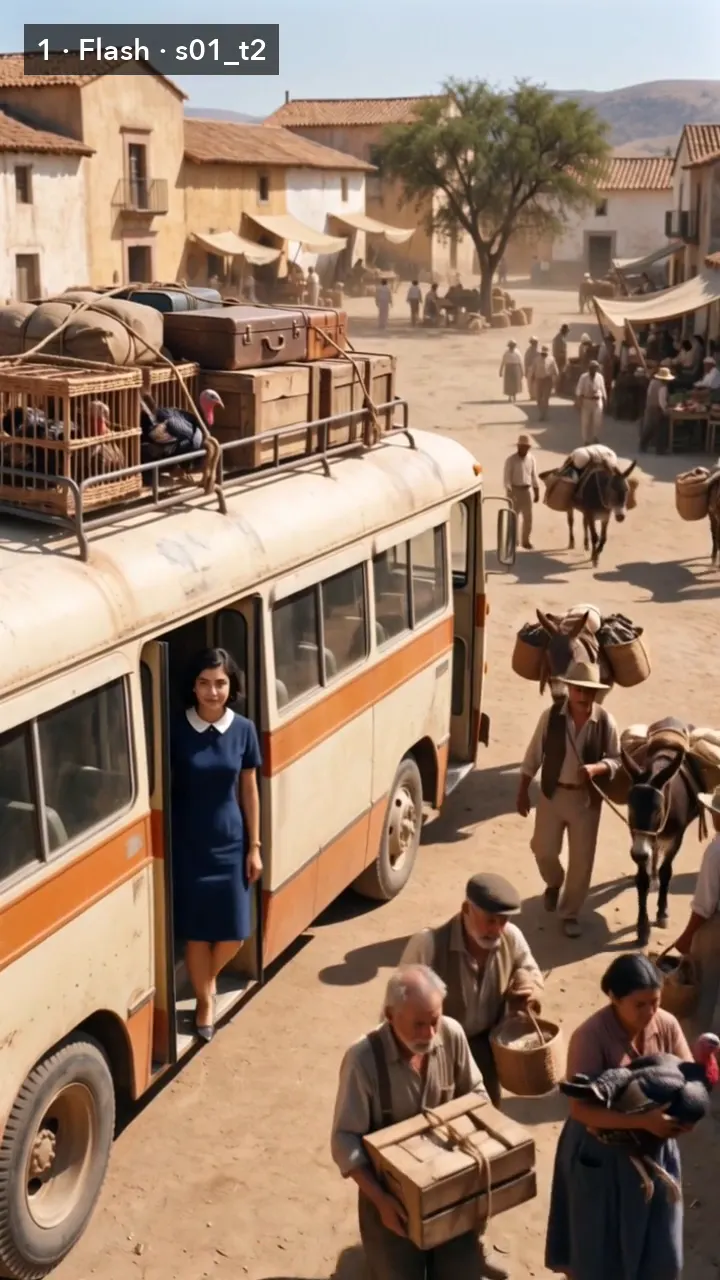
Episode 2 used 58 Kling clips, for 3,520.5 credits in all. Across both episodes there are 143 clip files on disk.
- Kling Flash
- Kling 4.0
- Kling AI Avatar Pro
- Wan 2.2 on Runpod
- Lines on Runpod (LongCat, InfiniteTalk)
Episode 1: every version and the test. Wan 2.2: 23 image to video and 2 first and last frame. Lines: 14 LongCat and 3 InfiniteTalk (the test).
Show the data
| Episode | Kling Flash | Kling 4.0 | Kling AI Avatar Pro | Wan 2.2 on Runpod | Lines on Runpod (LongCat, InfiniteTalk) |
|---|---|---|---|---|---|
| Episode 1 | 17 | 2 | 12 | 25 | 17 |
| Episode 2 | 44 | 14 | 0 | 0 | 0 |
Source: doce_campanadas/ep01/kie_jobs*.json, doce_campanadas/ep01/video_jobs.json, doce_campanadas/ep01/test/video_jobs.json, doce_campanadas/ep02/kie_jobs.json, doce_campanadas/ep02/kie_jobs_retakes.json. Data as of 2026-11-24 @e28cb68.
The model mix shows how the pipeline settled. Episode 1 spread its jobs across open models on Runpod and three Kling models. Episode 2 ran on Flash, with Kling 4.0 where Flash failed.
Voices, effects and the mix
The voices are ElevenLabs library voices, on the Starter plan at $6 a month. For episode 2 we auditioned 14 candidates and cast 5: Yarv for young Andrés, Anyi for young Lupita, Ximena for Lupita at sixty, Mario for Don Anselmo and José Angel for the radio announcer. Claude made a short reel per role, and I picked by ear.
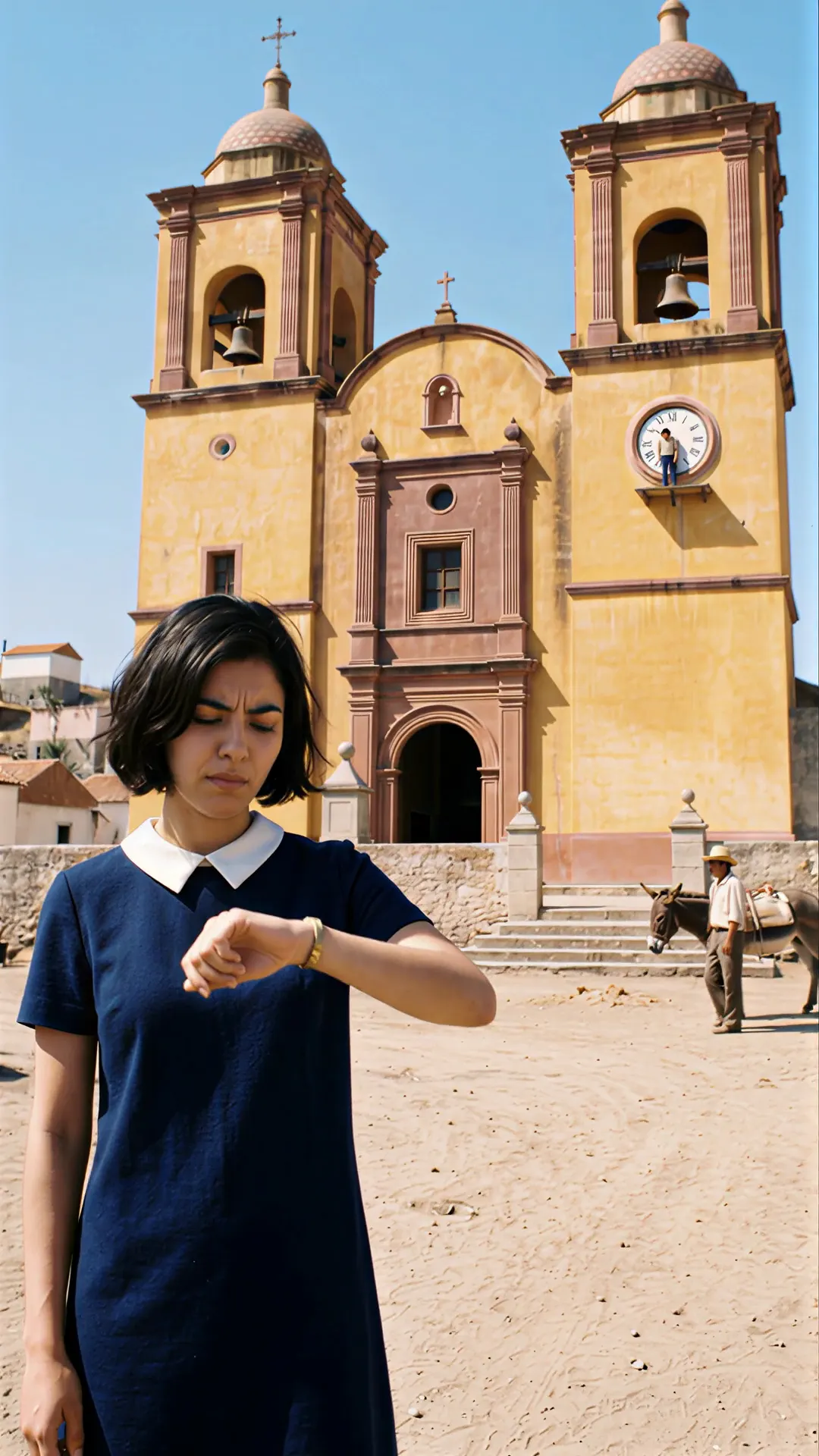
The direction goes into audio tags, written in square brackets before the line. Lupita's shout is [shouting from far, hands cupped around her mouth] ¡Está adelantado!. The radio is [formal 1960s radio announcer, heard faintly from inside a shop] La Hora Exacta. Son las ocho horas, un minuto. Each of the 14 lines is placed in its shot by time and cut to length. The radio voice is band-passed in the mix, so it sounds like it comes out of a small speaker across a room.
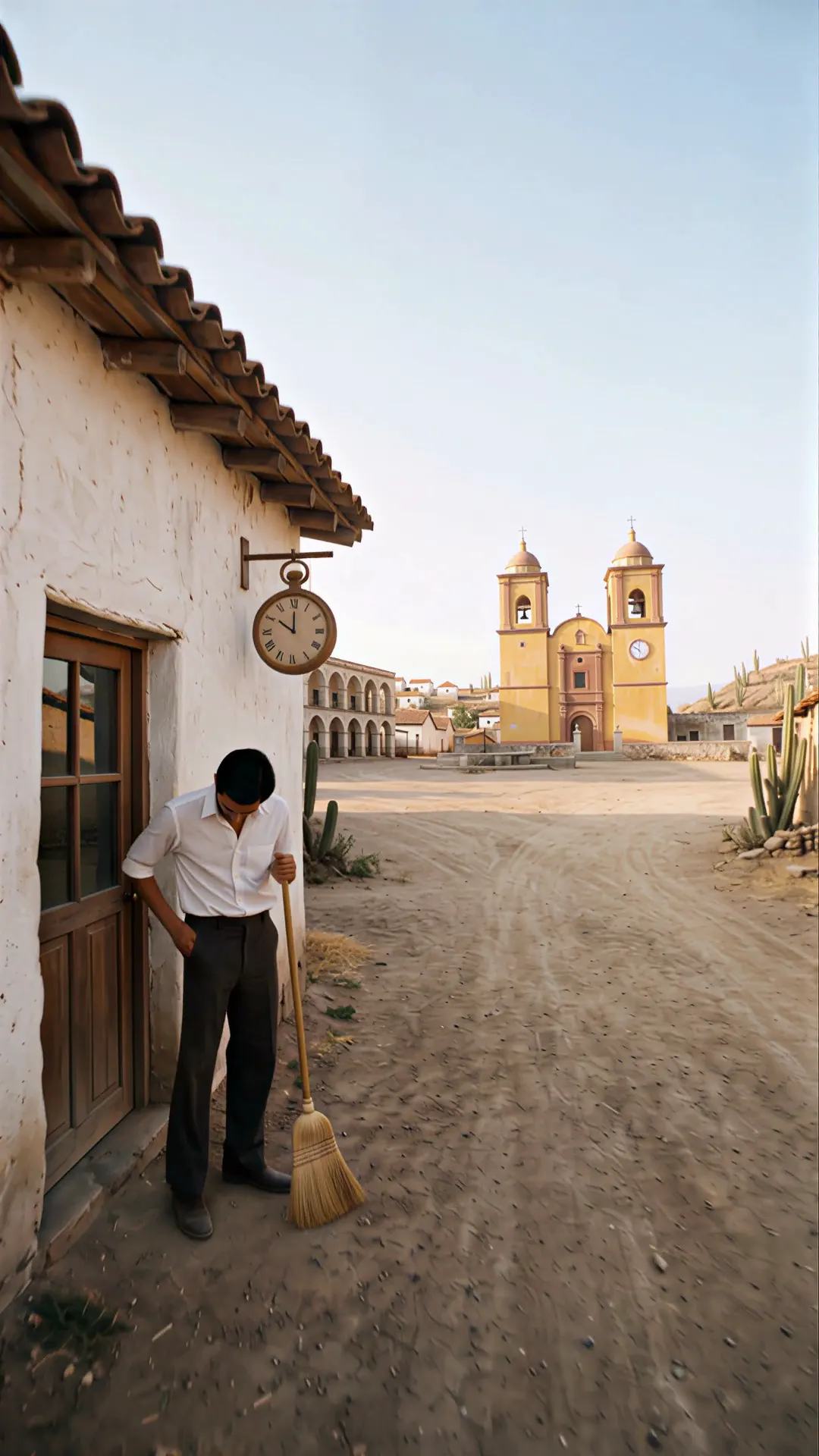
The effects are generated too: 22 in episode 2, after 15 in episode 1. There is a bus far away heard from the tower, the plaza in 1962, a broom, clocks ticking, the shop bell, a needle drop, the wedding, fireworks, rain, a funeral toll, a pendulum coming to rest and the static on the coach radio. Each cue hangs on a shot. The bell's prompt begins: "One single deep bronze church bell strike heard up close inside the belfry at midnight, a heavy clang with a long natural decay..."
Small lines get the same care as big ones. Andrés's grudging "Tenía razón" was added late. ElevenLabs made three takes of it, and I chose the second. Episode 1's effects were city sounds: the night bed of the Roma, the countdown, a party heard through a wall.
Every source is normalised to -23 LUFS before the mix, and the master goes out at -15 LUFS.
The waltz and "Lupita"
The score is a waltz. The idea came from Victor: the village waltzes of his mother's region, inspired by a musician from his family. I wrote a prompt and generated the waltz on Suno. It runs 169.9 s and plays under the opening, then comes back after the wedding.
The episode also needed a song: the record Lupita brings to the shop, the one they dance to, their song from then on. Victor and I wanted a plain love song with a verse or two that ring a bell about how they met. We chose a bolero, the romantic song of their era.
Claude and I wrote the lyric in the session. Every line has eleven syllables, with the stresses on the third, sixth and tenth. The rhymes go by sound, the way Mexican Spanish says them, so ceniza rhymes with sonrisa and tuya with arrulla.
The Suno style asked for a 1950s Mexican trío romántico: a requinto guitar intro and solo, two nylon-string guitars, maracas, bongos, three close male voices, a slow tempo and a warm mono recording with soft vinyl crackle. The exclude list kept out modern pop, drum kits, synths, autotune, reggaeton and mariachi trumpets.
The song took 3 versions. The first, called A deshora then, was a trío, and I liked everything about it except the harmony. The second, a solo voice, came out too high. I picked a take of the trío, 214 s long, and sent it to Victor.
Version 3 took the song's new name, Lupita. Her name is in the second verse now, the chorus looks into her gaze, and the song ends on a line by Victor. I liked it a lot better.
Here is the chorus as it stands, with a plain translation:
Ya no tengo más hora que la tuya, ni más cielo que el cielo en tu mirada, ni más canto que el canto que me arrulla, ni más luz que tu luz enamorada.
I have no hour now but yours, no sky but the sky in your gaze, no song but the song that lulls me, no light but your light, in love. The take in the film runs 206 s. The full lyric, with a translation, is on the song's own page.
Victor also brought the idea of radio dedications, from a family memory: an aunt who once dedicated a song to his mother on the radio.

In the film, the waltz plays under the opening until Lupita turns the dial. Lupita starts right there on the radio, band-passed, from "Ya no tengo más hora que la tuya". When she brings the record, the same playback opens up to full range. It runs past the wedding to the end of "ni más cielo que el cielo en tu mirada" and cuts out fast in the breath before the next line. Then the waltz fades back in, slowly, over their first New Year's Eve.
- The waltz
- "Lupita" on the radio
- "Lupita", her record
- Lines
- Effects
Show the data
| Lane | id | start | end |
|---|---|---|---|
| s00 | s00 | 0 | 3 |
| s01 | s01 | 3 | 6 |
| s02 | s02 | 6 | 8.5 |
| s03 | s03 | 8.5 | 11.5 |
| s04 | s04 | 11.5 | 14.5 |
| s05 | s05 | 14.5 | 16.5 |
| s07 | s07 | 16.5 | 19 |
| s08 | s08 | 19 | 21 |
| s09 | s09 | 21 | 23.5 |
| s10 | s10 | 23.5 | 25.8 |
| s11 | s11 | 25.8 | 28.8 |
| s12 | s12 | 28.8 | 31.3 |
| s13 | s13 | 31.3 | 34.8 |
| s14 | s14 | 34.8 | 35.8 |
| s15 | s15 | 35.8 | 36.8 |
| s16 | s16 | 36.8 | 39.3 |
| s17 | s17 | 39.3 | 41.8 |
| s18 | s18 | 41.8 | 44.3 |
| s19 | s19 | 44.3 | 48.3 |
| s20 | s20 | 48.3 | 50.8 |
| s21 | s21 | 50.8 | 53.3 |
| s22 | s22 | 53.3 | 55.3 |
| s23 | s23 | 55.3 | 58.3 |
| s24 | s24 | 58.3 | 59.8 |
| s25 | s25 | 59.8 | 62.8 |
| s26 | s26 | 62.8 | 65.8 |
| s27 | s27 | 65.8 | 69.3 |
| s28 | s28 | 69.3 | 72.3 |
| s29 | s29 | 72.3 | 74.3 |
| s30 | s30 | 74.3 | 76.8 |
| s31 | s31 | 76.8 | 78.8 |
| s32 | s32 | 78.8 | 80.8 |
| s33 | s33 | 80.8 | 82.8 |
| s34 | s34 | 82.8 | 84.8 |
| s35 | s35 | 84.8 | 87.3 |
| s36 | s36 | 87.3 | 89.3 |
| s37 | s37 | 89.3 | 92.3 |
| s38 | s38 | 92.3 | 95.3 |
| s39 | s39 | 95.3 | 98.3 |
| s40 | s40 | 98.3 | 100.8 |
| s41 | s41 | 100.8 | 103.8 |
| s42 | s42 | 103.8 | 106.3 |
| s43 | s43 | 106.3 | 108.3 |
| s44 | s44 | 108.3 | 110.3 |
| s45 | s45 | 110.3 | 112.8 |
| s46 | s46 | 112.8 | 115.8 |
| s47 | s47 | 115.8 | 118.8 |
| s48 | s48 | 118.8 | 121.8 |
| Credits | credits | 121.8 | 126.8 |
| Andrés | s05_l1 | 15.1 | 16.7 |
| Lupita | s04_l1 | 13.3 | 15.22 |
| Andrés | s08_l1 | 19.4 | 21.24 |
| Don Anselmo | s10_l1 | 23.5 | 28.7 |
| Andrés | s13_l1 | 31.4 | 33.88 |
| Lupita | s13_l2 | 33.65 | 35.89 |
| Radio | s17_r1 | 39.3 | 43.22 |
| Lupita | s18_l1 | 42.1 | 43.86 |
| Andrés | s19_l1 | 47.15 | 49.07 |
| Andrés | s21_l1 | 51.1 | 53.18 |
| Andrés | s22_l1 | 53.6 | 54.96 |
| Radio | s23_r1 | 55.3 | 56.6 |
| Lupita | s23_l1 | 56.6 | 59 |
| Lupita | s33_l1 | 82.8 | 85.36 |
| The waltz | waltz | 0 | 56.6 |
| "Lupita" on the radio | lupita-radio | 56.6 | 58.3 |
| "Lupita", her record | lupita-record | 58.3 | 67.05 |
| The waltz | waltz | 66 | 126.8 |
| bus far | bus_far | 0 | 3.5 |
| bus stop | bus_stop | 3 | 8 |
| plaza 1962 | plaza_1962 | 3 | 28.8 |
| broom | broom | 28.8 | 31.8 |
| clocks ticking | clocks_ticking | 36.8 | 39.3 |
| classroom | classroom | 44.3 | 48.3 |
| clocks ticking | clocks_ticking | 48.3 | 62.8 |
| shop bell | shop_bell | 48.45 | 50.45 |
| radio dial | radio_dial | 56.4 | 58.4 |
| needle drop | needle_drop | 58.7 | 60.7 |
| kids glass | kids_glass | 61 | 64 |
| wedding | wedding | 62.8 | 65.8 |
| fireworks | fireworks | 65.8 | 69.3 |
| bell strike | bell_strike | 66.1 | 71.1 |
| bell strike | bell_strike | 67.3 | 72.3 |
| bell strike | bell_strike | 68.5 | 73.5 |
| clocks ticking | clocks_ticking | 69.3 | 76.8 |
| radio dial | radio_dial | 72.4 | 74.4 |
| radio dial | radio_dial | 73.3 | 75.3 |
| fireworks | fireworks | 76.8 | 80.8 |
| bell strike | bell_strike | 77.1 | 82.1 |
| bell strike | bell_strike | 78.1 | 83.1 |
| bell strike | bell_strike | 79.1 | 84.1 |
| bell strike | bell_strike | 80.1 | 85.1 |
| fireworks | fireworks | 80.8 | 82.8 |
| rain | rain | 84.8 | 89.3 |
| dog whimper | dog_whimper | 85.8 | 87.8 |
| fireworks | fireworks | 89.3 | 92.3 |
| fireworks | fireworks | 92.3 | 95.3 |
| bell strike | bell_strike | 92.6 | 97.6 |
| bell strike | bell_strike | 93.8 | 98.8 |
| bell strike | bell_strike | 94.9 | 99.9 |
| bell toll | bell_toll | 95.5 | 103.5 |
| pendulum stop | pendulum_stop | 98.3 | 101.3 |
| clocks ticking | clocks_ticking | 100.8 | 106.3 |
| keys | keys | 107.2 | 109.2 |
| street 2019 | street_2019 | 108.3 | 110.3 |
| coach station | coach_station | 110.3 | 112.8 |
| coach interior | coach_interior | 112.8 | 118.8 |
| static | static | 116.6 | 121.6 |
Source: doce_campanadas/ep02/edit/cut_hd.json (shots, screen time = (out - in) / speed), lines.json (at, dur; else the line's audio length), music.json, sfx.json; timing rules of tools/boardplan.py. Data as of 2026-11-24 @e28cb68.
The strip shows the whole episode shot by shot, with lanes for the music, the lines and the effects. Follow the music lane from left to right: waltz, radio, record, waltz.
Credits: the waltz is music generated with Suno. Lupita has lyrics by Kevin Sallée and Victor M. Rodriguez and music generated with Suno.
Upscaling to 1080p
Kling's clips come out at 720p, and the film goes out at 1080p. We upscaled every clip of the cut with SeedVR2, the 3B model, on Runpod H100s at $4.39/h. The settings: the short side to 1080, a whole clip in one batch so there are no seams in time, LAB colour correction, a fixed seed, and a tiled VAE decode that halves the time. Then comes a centre crop to the film's frame.
A clip of about three seconds took around 62 s. We tested the 7B model too. It kept faces a touch truer and came out a little softer, and the decode took most of the time anyway. I chose 3B.
Look at the faces and the fine edges, where Kling's clip goes soft.
The run had a miss. The first pod agent started the batch and handed back to me before it finished. It had been told to terminate the pod if the batch stopped, so it killed the pod with most of the clips still to do. A second pod finished the job. The rule now: a pod agent waits for its batch to end and never hands back mid-run.
All 49 clips came back checked for size, frame rate and frame count, for about $5.90 of GPU time. That figure is an estimate from the minutes, since I have not read the bill yet.
LongCat on an A100: 43 s a step, about twice as slow as an H100 (no per-second figure).
Show the data
| Job | GPU seconds per second of video | low | high |
|---|---|---|---|
| Wan 2.2 image to video (L40S, 720x1280) | 31 | 29.5 | 32.5 |
| InfiniteTalk lines (L40S, 480x832) | 32.2 | — | — |
| SeedVR2 3B upscale to 1080p (H100) | 20.4 | — | — |
Source: README.md "Video" (L40S timings); tools/upscale/README.md (SeedVR2 on an H100). Data as of 2026-11-24 @e28cb68.
For scale, the chart puts the GPU jobs of both episodes on one measure: GPU seconds per second of video.
Subtitles, credits and the upload
The last steps are the dullest ones and the easiest to get wrong. A script burns the series title and the Spanish subtitles into the master and writes the subtitle file for YouTube. In episode 1 the subtitle timing came from the silences in the dialogue track. In episode 2 each line sits where the animatic placed it, for as long as its audio speaks.
The title goes over the first shot, inside the middle square of the frame, because WhatsApp crops link previews to that square. The thumbnail follows the same rule.
From episode 2 on, the credits play on black for five seconds after the last shot fades. With them, episode 2 runs 126.9 s.

The upload is mine. I drag the file into YouTube Studio myself, because the browser extension the agents use caps uploads at a small size. Then come the chores: upload the Spanish subtitle file, switch on the label for altered or synthetic content, and set the language to Spanish (Mexico).
Two traps cost me time. With an ad blocker on, Publish failed without a word. And custom thumbnails need a verified phone number on the account. A smaller one: refreshing the upload page makes a second copy of the video.
The category is Film & Animation, and the AI label stays on for every film. The site carries the same line in its footer.
What it cost
Here is what the films cost in usage-billed AI, meaning the services that charge by the job or by the hour. Subscriptions come after, and so does a cost no chart shows.
Episode 1 took $11.01 on Kie.ai for the all-Kling version, the lines on Avatar Pro included, and $15.93 on Runpod for the test, the night of open models and the Chole close-ups. That is about $26.94 in all, the price of a pilot that made three versions of one film.
Episode 2 took $17.60 on Kie.ai for every clip and retake, plus about $5.90 for the upscale. That is about $23.50 in all.
Both films together come to about $50.44.
- Kie.ai (Kling)
- Runpod (GPUs)
Episode 2, Runpod: an estimate (minutes x catalog price). Monthly subscriptions: ElevenLabs Starter $6; Higgsfield and Suno, no price on file.
Show the data
| Episode | Kie.ai (Kling) | Runpod (GPUs) | total | stat | estimate |
|---|---|---|---|---|---|
| Episode 1 | 11.01 | 15.93 | 26.94 | ep1-usage-usd | — |
| Episode 2 | 17.6 | 5.9 | 23.5 | ep2-usage-usd | runpod |
Source: costs.md; doce_campanadas/ep02/kie/tasks_*.json; doce_campanadas/ep02/NOTES.md "Final"; README.md ($ a credit). Data as of 2026-11-24 @e28cb68.
The bars split each episode by service. Episode 2 is the longer film and the cheaper one, because it made one version and spent its trial and error on stills, which cost nothing extra.
Subscriptions sit apart. ElevenLabs Starter is $6 a month, and the voices and effects of both films came out of it. Higgsfield Unlimited and Suno Pro are monthly plans too. With Unlimited, each extra still costs $0, which is why we can afford to throw most takes away.
Show the data
| Episode | Dollars per second |
|---|---|
| Episode 1 (112.8 s) | 0.24 |
| Episode 2 (121.9 s without credits) | 0.19 |
Source: ep1-usage-usd / ep1-duration; ep2-usage-usd / ep2-film-duration. Data as of 2026-11-24 @e28cb68.
Per second of finished film, episode 1 cost about $0.24/s and episode 2 about $0.19/s. Both figures are derived: the usage spend divided by the length of the film.
None of these figures counts our time, Victor's and mine. That was the larger cost by far, and the one I would spend again.
Groundwork for the next episodes
Episode 1 found the pipeline. Episode 2 built the parts that make the next episodes cheaper.
The pipeline is code: 23 Python modules, 2,295 lines in all. The planners are pure functions with tests, 2,636 lines of them and 210 unit tests in all. Voices, effects, the pods, Kling, frame sheets, the cut, the mix, the burn, the storyboard and the animatic, the review copies, the Blender guard and the Higgsfield helper each have a module.
- Story Victor: voice notes and a PDF script
- 3D blockout Blender, from code (town3d)
- Look masters Nano Banana Pro on Higgsfield
- Stills Nano Banana Pro, Higgsfield Unlimited
- Animatic tools.board and ffmpeg
- Video Kling Flash and 4.0 on Kie.ai
- Lines ElevenLabs eleven_v4Effects ElevenLabs sound effectsMusic Suno
- Upscale SeedVR2 3B on a Runpod H100
- Title and subtitles tools.burn
- YouTube Kevin uploads it
Show the data
| Step | Tool and model | group |
|---|---|---|
| Story | Victor: voice notes and a PDF script | — |
| 3D blockout | Blender, from code (town3d) | — |
| Look masters | Nano Banana Pro on Higgsfield | — |
| Stills | Nano Banana Pro, Higgsfield Unlimited | — |
| Animatic | tools.board and ffmpeg | — |
| Video | Kling Flash and 4.0 on Kie.ai | — |
| Lines | ElevenLabs eleven_v4 | sound |
| Effects | ElevenLabs sound effects | sound |
| Music | Suno | sound |
| Upscale | SeedVR2 3B on a Runpod H100 | — |
| Title and subtitles | tools.burn | — |
| YouTube | Kevin uploads it | — |
Source: ARTICLE.md §18; film repo README.md; tools/. Data as of 2026-11-24 @e28cb68.
Each box in the diagram is a step, with the tool and the model that does it, from Victor's story to YouTube.
Each episode is a folder of data files: the shots with their cameras, poses, props and prompts; the cast and the lines with their audio tags; the effects; the music cues; the video jobs; the publishing details. One edit moves the animatic, the cut and the subtitles together.
The town exists now, with its two eras and 33 cameras, its masters, the shop and the home. The characters are locked with their references: Elisa, Andrés at five ages, Lupita at five ages, Chole, Don Anselmo and the dog. Lupita is their song, and the waltz is ready. The characters, the town and the song can all come back.


The rules are written down in the repo. Animatic first, video only for the locked cut. Stills are start frames. Flash for calm shots, Kling 4.0 for fast ones. One Chrome agent at a time. I check every new reference before anything is generated from it. Two agents are specialised: one runs waves of stills on Higgsfield in Chrome, and the other changes the Blender town. Each has only the tools its job needs, with the rules built in.
Show the data
| Part | Lines |
|---|---|
| Tools (23 modules) | 2,295 |
| Tests (210) | 2,636 |
| The Blender town | 2,764 |
| Upscale on Runpod | 114 |
Source: wc -l tools/*.py, tools/upscale/*.py, tests/*.py, doce_campanadas/town3d/*.py; grep -c "def test" tests/*.py. Data as of 2026-11-24 @e28cb68.
The chart compares the pipeline code, its tests and the town. The tests are about as long as the tools they check.
Working with Claude Code
I made these films with Claude Code, Anthropic's coding agent, running Claude Opus. The split was simple. I direct, decide and check. Claude drafts the prompts, drives Higgsfield in my Chrome, rents and runs the pods, judges takes overnight, writes the tools and keeps the notes. "Kevin picks" appears all through those notes.
Claude co-authored every commit in the film repo: 184 commits, 100% of them with Claude as co-author. This website was built the same way.
Show the data
| Hour | Commits |
|---|---|
| 2026-11-23T11 | 10 |
| 2026-11-23T12 | 16 |
| 2026-11-23T13 | 10 |
| 2026-11-23T14 | 8 |
| 2026-11-23T15 | 3 |
| 2026-11-23T16 | 0 |
| 2026-11-23T17 | 0 |
| 2026-11-23T18 | 2 |
| 2026-11-23T19 | 12 |
| 2026-11-23T20 | 15 |
| 2026-11-23T21 | 11 |
| 2026-11-23T22 | 12 |
| 2026-11-23T23 | 14 |
| 2026-11-24T00 | 24 |
| 2026-11-24T01 | 6 |
| 2026-11-24T02 | 4 |
| 2026-11-24T03 | 4 |
| 2026-11-24T04 | 6 |
| 2026-11-24T05 | 1 |
| 2026-11-24T06 | 0 |
| 2026-11-24T07 | 15 |
| 2026-11-24T08 | 5 |
| 2026-11-24T09 | 3 |
| 2026-11-24T10 | 3 |
Source: git -C ~/dev/vadenuezmx log, local time (UTC-6), grouped by hour. Data as of 2026-11-24 @e28cb68.
The busiest hour was midnight on the 24th, with 24 commits, while the town was being staged. The bars from 1:30–5:04 are the overnight stills run, while I slept.
It did not all go smoothly, and the misses are my favourite part, because each one became a written rule the same day. Here are three.
Two agents once drove the same Chrome tab at the same time, each clicking through the other's work. Now only one Chrome agent runs at a time.
A commit was gated on a test piped through tail, and the pipe hid the test's exit code, so a failing run would have looked like a passing one. Now tests run on their own before a commit, or with pipefail set.
References uploaded through Higgsfield's MCP never showed up in the web page where the stills are made. Now references are uploaded in the page itself.
Its judgement on takes was good, and it was still its own. In the morning after the overnight run I asked for two more takes. In s06 I wanted Lupita to feel ridiculous, with her arms down. In s30 the loupe floated in front of Andrés's eye, so it went onto a headband. On the rest I wrote "rest is perfect". Some of the night's misses were its own prompts: s06 asked for the blush, the peak of the shot, when the still should show the start.
One rule is about me as much as the agent. When I ask what the plan is, the answer is the plan, and then it waits for my go.
Add the pod agent that stopped mid-batch, and you have the pattern. The agent does a lot of the work, I check all of it, and when something breaks we write down why.
Victor is already writing the next stories. The town, the characters and the song are waiting for them.